
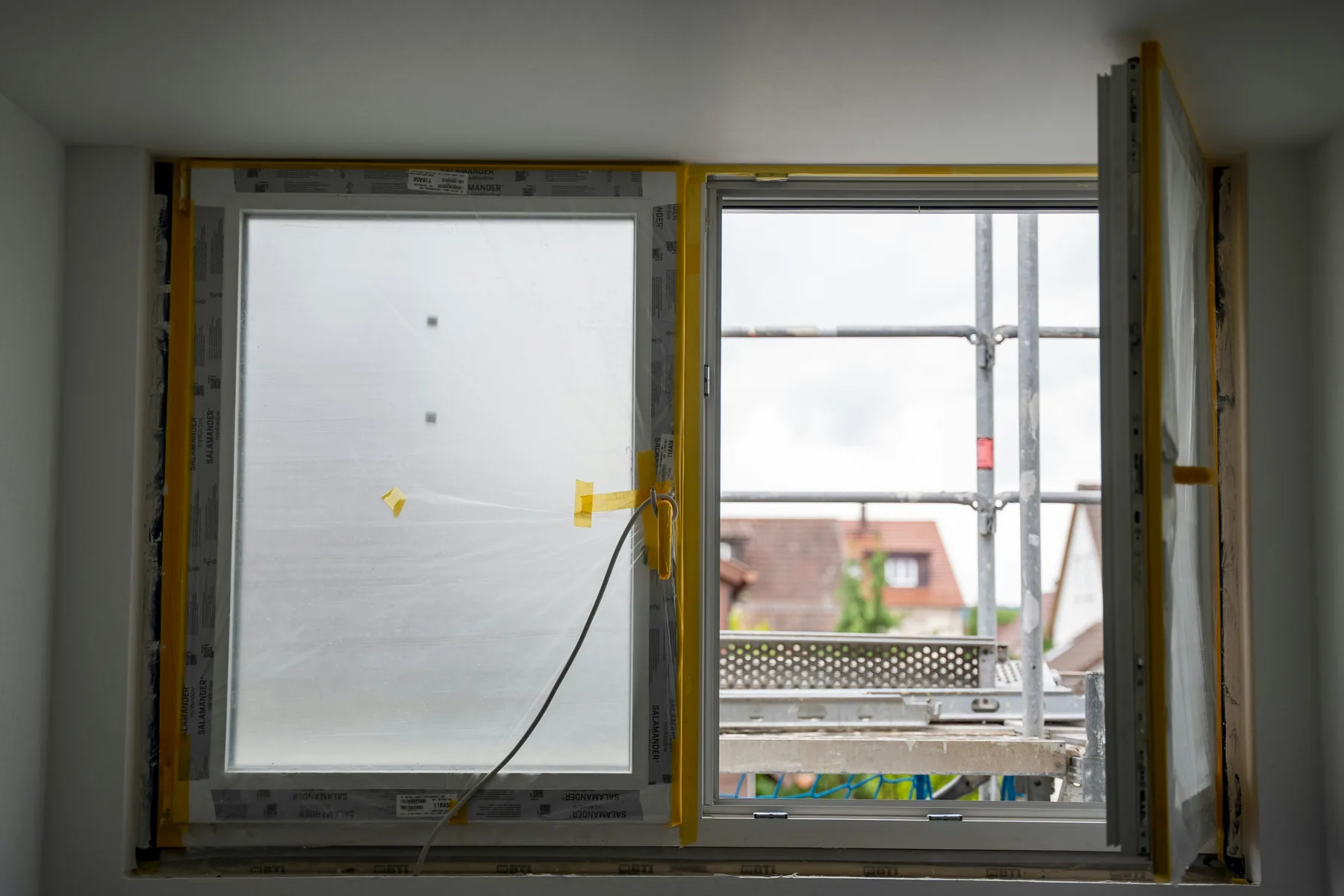
Window installation timing may look like a small detail, but it affects sealing quality, finishing cleanliness, and silicone stability around the openings for years.
Why Timing Matters
The timing of window installation is an important decision during the finishing stage of a building. It affects sealing quality, frame and glass cleanliness, and how well the silicone adheres around the openings. Many project owners ask whether windows should be installed after plaster, after primer, after exterior paint, or after interior paint.
In most projects, our practical recommendation is to install windows after primer. This timing provides a good balance between silicone adhesion and opening protection, while still requiring proper protection for the frames and glass during exterior painting.
Best Recommendation: After Primer
Installing windows after primer is usually the most suitable option for residential and commercial projects. At this stage, the wall surface is more stable than raw plaster, but the final paint has not yet been applied.
Advantages
- Silicone adheres better to a cleaner and more stable surface.
- The openings can be closed earlier, helping protect the interior from dust and water during later work.
- Window alignment and adjustment can be completed before the final finishing stage.
- It reduces the chance of cutting or modifying around openings after interior paint is complete.
Disadvantages
- The frame or glass may be exposed to exterior paint overspray if not protected properly.
- The contractor must cover the frames and glass before exterior painting, especially on the facades.
For this reason, when windows are installed after primer, the frames and glass should be protected carefully before exterior painting, and any paint or material residue should be cleaned quickly before it bonds to the surface.
Installing After Exterior Paint
Some projects prefer delaying window installation until after exterior paint, especially when textured coatings such as texo are used. This can help protect the frame and glass from paint marks, but it also comes with important risks.
Disadvantages
- If the exterior paint quality is poor or the coating did not bond well, it may be damaged during window installation.
- The paint around the openings may peel when fixing the frame or cleaning the edges.
- Any peeling or weak area around the opening may allow water to pass through over time.
- Exterior silicone application may be less reliable if the final edge surface is unstable.
This option can work in some cases, but it requires high-quality exterior paint and well-prepared opening edges before installation.
Installing After Interior Paint
Installing after interior paint keeps the frames and glass cleaner from paint work, but it is usually not the best choice if the goal is proper sealing and closing the openings at the right stage.
- Openings may still need adjustment or cleaning after painting, which can affect the final finish.
- Fixing and silicone work after paint may leave marks that require touch-ups.
- The building remains open for a longer period, increasing dust and moisture entering the interior.
Installing After Plaster
Installing windows directly after plaster is generally not common in our local projects, because the surface may not be ready enough for clean finishing and strong silicone adhesion.
In some countries, windows are installed after plaster as part of a different construction system, where additional waterproofing and treatment layers are applied around the openings afterward. This approach can be stronger in terms of waterproofing and long-term protection, but it is usually more expensive and more difficult to maintain if a problem appears later around the openings or insulation layers.
Suggested Site Sequence
- Complete plastering and prepare the edges around the openings.
- Apply primer and confirm the surface is dry.
- Install the windows and adjust alignment and gaps.
- Apply silicone and the required exterior treatment.
- Protect frames and glass before exterior and interior painting.
Conclusion
The best time we recommend for window installation is after primer. At this stage, the wall is reasonably prepared, silicone can adhere better, and the openings can be closed before the final finishing work is completed.
The most important point is to protect the frames and glass properly during exterior painting, especially when using textured coatings such as texo or any heavy exterior paint. This gives a good balance between installation quality, clean finishing, and reducing future water leakage risks.
0 class
There are no comments yet. Be the first to comment on this post.